
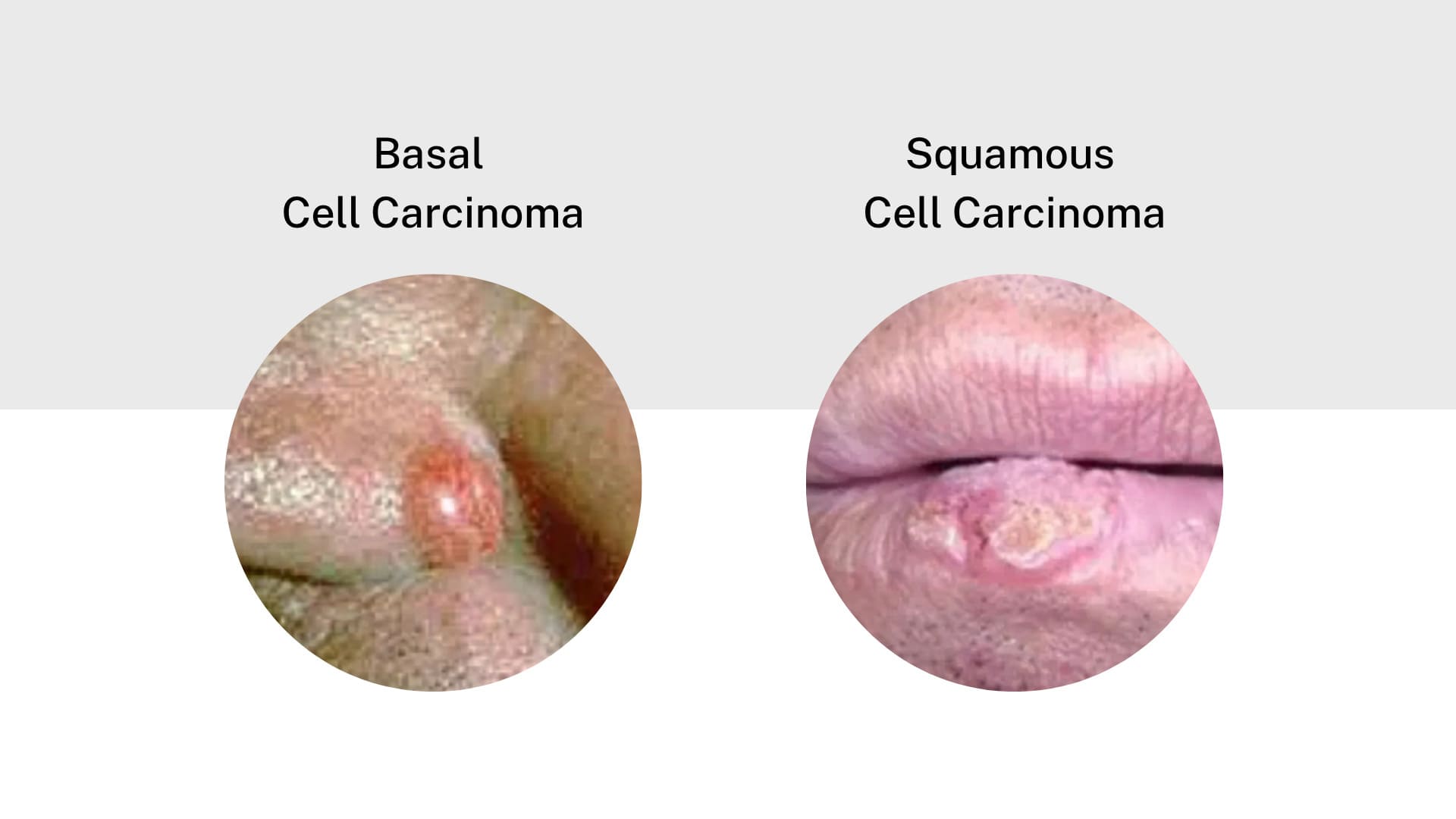
Basal Cell Carcinoma vs. Squamous Cell Carcinoma: Key Differences
Basal cell carcinoma (BCC) and squamous cell carcinoma (SCC) are the two most common forms of skin cancer. Together, they account for the majority of non-melanoma skin cancers diagnosed each year. While they share a common cause (long-term ultraviolet (UV) exposure) they behave differently and can appear in distinct ways on the skin.
Understanding the differences between basal cell carcinoma vs squamous cell carcinoma helps patients recognize early warning signs and seek timely medical evaluation.
What Are BCC and SCC Skin Cancers?
When dermatologists refer to BCC and SCC skin cancers, they are describing cancers that originate from different types of skin cells.
Basal cell carcinoma develops from basal cells located in the lowest layer of the epidermis. These cells are responsible for producing new skin cells as old ones shed.
Squamous cell carcinoma arises from squamous cells, which sit closer to the surface of the skin and make up much of the outer epidermis.
Although both cancers are strongly linked to cumulative sun exposure, they differ in how they grow, how they appear, and how likely they are to spread.
To see how these skin cancers develop and why they behave differently, Dr. Aaron Farberg explains the basics in this short Bare Dermatology video.
Basal Cell Carcinoma: The Most Common Skin Cancer
Basal cell carcinoma is the most frequently diagnosed skin cancer. It tends to grow slowly and rarely spreads to distant parts of the body, but it can still cause significant local damage if left untreated.
Common signs of BCC include:
- A pearly or translucent bump
- A pink growth with raised edges
- A sore that bleeds or doesn’t heal
- A scar-like patch that slowly enlarges
Basal cell carcinomas often develop on areas with chronic sun exposure, such as the face, ears, neck, and scalp.
Because they typically grow gradually, these cancers may go unnoticed for months or even years without evaluation.
If you’d like to understand how basal cell carcinoma is diagnosed and treated, our basal cell carcinoma care page provides helpful information.

Squamous Cell Carcinoma: A More Aggressive Pattern
Squamous cell carcinoma generally behaves more aggressively.
SCC develops from surface skin cells and tends to grow faster than basal cell carcinoma. While still highly treatable when detected early, squamous cell carcinoma has a higher risk of spreading to nearby lymph nodes or deeper tissues.
Common signs of SCC include:
- A rough, scaly patch
- A firm red nodule
- A crusted or wart-like growth
- A sore that bleeds or becomes tender
Squamous cell carcinoma may appear on sun-exposed areas like the face, lips, ears, and hands, but it can also develop on scars or areas of chronic skin irritation.
Dr. Aaron Farberg also provides a helpful overview of squamous cell carcinoma, including how it develops and why prompt treatment is important.

Basal Cell Carcinoma vs Squamous Cell Carcinoma: Key Differences
The comparison between basal cell carcinoma and squamous cell carcinoma generally comes down to three important factors that influence how each cancer behaves.
Growth behavior
Basal cell carcinoma typically grows slowly and rarely spreads beyond the skin. Squamous cell carcinoma tends to grow more quickly and carries a greater risk of local invasion.
However, nutrition should complement, not replace, sun protection. No dietary choice can counteract repeated UV exposure.
Appearance
Basal cell carcinoma often appears smooth or pearly, while squamous cell carcinoma frequently looks rough, scaly, or crusted.
Risk of spread
SCC has a higher chance of spreading to nearby lymph nodes or tissues compared with BCC.
Despite these differences, both cancers can cause significant damage if they are untreated.
Risk of spread
In general, squamous cell carcinoma is considered more serious because it has a greater potential to spread. However, basal cell carcinoma should never be ignored. Even though it rarely metastasizes, it can grow deeply into surrounding tissues and cause disfigurement if left untreated.
Why Early Detection Matters
Early detection dramatically improves outcomes for both BCC and SCC skin cancers. When caught early, treatment is typically straightforward and highly successful.
Dermatologists evaluate suspicious lesions using clinical examinations and specialized tools.
At Bare Dermatology, physicians evaluate both basal cell carcinoma and squamous cell carcinoma with precision, focusing on early diagnosis and effective treatment planning.
Taking Skin Changes Seriously
Understanding the difference between basal cell carcinoma vs squamous cell carcinoma helps patients recognize potential warning signs and take skin changes seriously.
Both cancers are strongly linked to sun exposure and are highly treatable when identified early. Paying attention to new growths, persistent sores, or changing patches of skin can make a meaningful difference in early diagnosis.
If you notice a suspicious lesion or have concerns about a spot that isn’t healing, you can request an appointment with Bare Dermatology for expert evaluation. With multiple locations across Texas, our team provides comprehensive skin cancer screening and personalized care focused on long-term skin health.


