
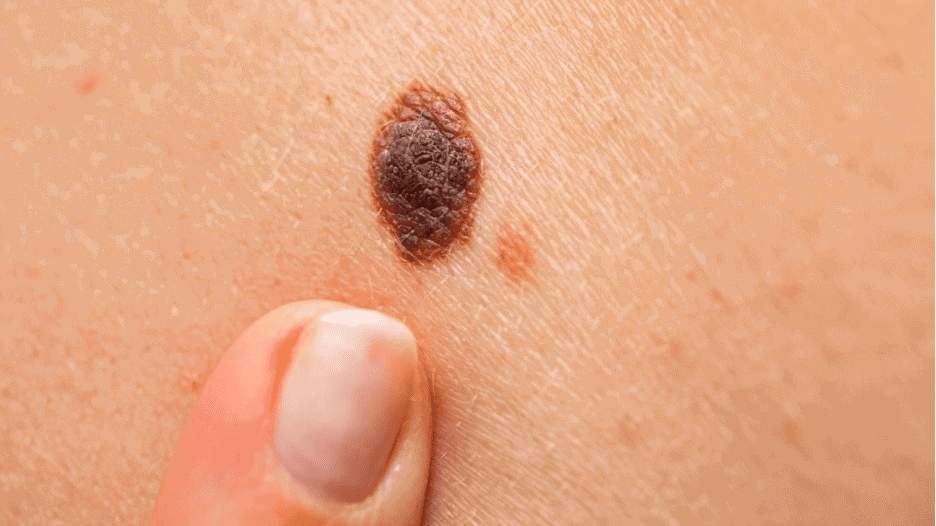
Melanoma is one of the most serious forms of skin cancer, but when it’s detected early, it is also highly treatable. The challenge is that early melanoma can look subtle and is often mistaken for a harmless mole. That’s where the ABCDE rule comes in, a dermatologist-backed method designed to help patients recognize warning signs before melanoma advances.
This guide explains the ABCs of skin cancer, what changes should raise concern, and why expert diagnosis remains essential.
What Are the ABCDEs of Skin Cancer?
The American Academy of Dermatology outlines the ABCDEs of melanoma as a key tool for early detection during routine skin self-exams
Each letter represents a specific feature that may indicate melanoma.
A: Asymmetry
Asymmetry means one half of a mole does not match the other.
Benign moles are usually symmetrical. In contrast, melanoma lesions often have uneven shapes, with one side appearing different in size, contour, or thickness. When evaluating ABCDE moles, asymmetry is often one of the earliest red flags.
B: Border
The border of a melanoma is frequently irregular, uneven, or poorly defined. Instead of smooth, rounded edges, suspicious moles may have:
- Jagged or notched borders
- Blurred or fading edges
- Borders that appear to spread into surrounding skin
Irregular borders are a common feature in ABCDE mole cancer evaluations and should not be ignored.
C: Color
Color variation is one of the most telling signs in melanoma diagnosis. While benign moles are typically a single shade of brown, melanoma may contain multiple colors, including:
- Black
- Dark brown
- Red
- Blue
- White
Uneven or changing color is a key indicator when learning how to identify melanoma cancer.
D: Diameter
Diameter refers to the size of the lesion. Melanomas are often larger than 6 millimeters (about the size of a pencil eraser), but size alone does not determine risk. Some early melanomas can be smaller, which is why diameter should always be evaluated alongside the other ABCDEs of melanoma.
Any growing mole, regardless of size, deserves attention.
E: Evolving
Evolving is often considered the most critical factor in the ABCDE rule for skin cancer. A mole that changes in:
- Size
- Shape
- Color
- Texture
- Sensation (itching, tenderness, bleeding)
If a spot looks different from others on your body or changes over time, it should be evaluated by a dermatologist.

How Melanoma Typically Appears
Melanoma does not always look the same. It may appear as:
- A new dark spot that looks different from surrounding moles
- A mole that suddenly changes
- A flat or raised lesion with uneven pigment
- A spot that bleeds, crusts, or becomes irritated
For additional guidance, the American Academy of Dermatology provides a clear, dermatologist-reviewed overview of the ABCDEs of melanoma and how to use them during skin self-checks.
Why the ABCDE Rule Is a Screening Tool, Not a Diagnosis
While the abcs of skin cancer are an excellent guide for identifying concerning lesions, they do not confirm a diagnosis.
A true melanoma cancer diagnosis requires:
- A professional skin exam
- Dermoscopic evaluation to assess structures beneath the skin
- A biopsy when indicated
Some melanomas may not meet all ABCDE criteria, and some benign moles may appear suspicious. This is why dermatologist evaluation is essential for accurate melanoma diagnosis.
Who Should Be Especially Vigilant?
Anyone can develop melanoma, but risk is higher if you have:
- A history of sunburns
- Fair skin, light eyes, or light hair
- A large number of moles
- A personal or family history of skin cancer
- Use of tanning beds
For high-risk individuals, regular professional skin exams are critical, even if no obvious changes are noticed.
Early Awareness Saves Lives
Knowing what the ABCDEs of skin cancer are gives you a powerful tool for early awareness. By understanding this rule and monitoring your skin regularly, you can recognize changes sooner and seek care without delay.
However, self-checks are only the first step. When something looks new, different, or evolving, professional evaluation is the safest and most reliable path forward.
If you’ve noticed a changing mole or want reassurance through a professional skin exam, schedule an appointment with Bare Dermatology. Early evaluation can make all the difference in protecting your skin and your health.


