
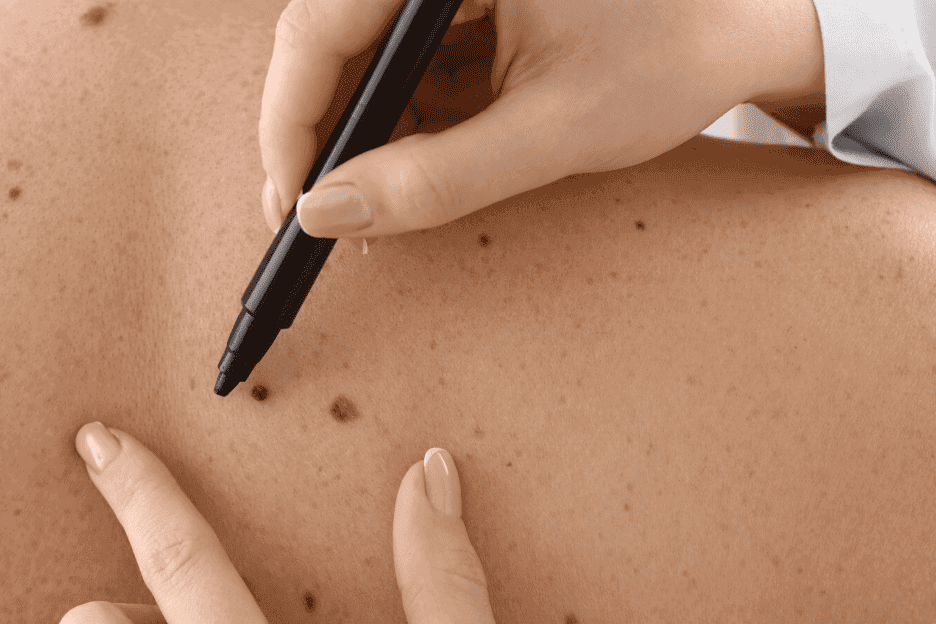
Skin cancer doesn’t always announce itself . In many cases, the earliest symptoms are subtle, small changes in the skin that are easy to overlook or dismiss. Knowing the symptoms of skin cancer and understanding what deserves medical attention can make a critical difference in early detection and successful treatment.
This guide explains what skin cancer can look like, how symptoms vary between common types of skin cancer, and how to know if you have skin cancer before it becomes advanced.
What Can Skin Cancer Look Like?
Skin cancer can appear in many different ways. It may show up as:
- A new spot that looks different from others on your skin
- A mole that changes in size, shape, or color
- A sore that doesn’t heal
- A rough or scaly patch
- A growth that bleeds, crusts, or becomes tender
Common Skin Cancer Symptoms and Signs
The following are the seven warning signs and symptoms of skin cancer to never ignore:
1. Asymmetry
If one half of a mole doesn’t match the other, it may be concerning. Asymmetry is especially associated with melanoma.
2. Irregular or Changing Borders
Borders that are jagged, blurred, or uneven, especially if they change over time, can be a sign of skin cancer.
3. Color Changes
A spot with multiple colors (brown, black, red, white, or blue) or a noticeable color shift deserves evaluation.
4. Diameter or Rapid Growth
While many cancers are larger than a pencil eraser, size alone doesn’t determine risk. Rapid growth is often more important than size.
5. Evolving or Changing Lesions
A mole or spot that changes in appearance, texture, or sensation (itching, tenderness, bleeding) is one of the strongest warning signs.
6. Non-Healing Sores
A sore that bleeds, scabs, heals, and then reopens, or never heals at all, is a classic sign of basal or squamous cell carcinoma.
7. Scaly or Rough Patches
Persistent scaly, crusted, or thickened areas, especially on sun-exposed skin, can indicate early squamous cell carcinoma.
The American Academy of Dermatology provides a helpful guide on how to perform regular skin self-exams and what changes to look for between professional visits.

Symptoms by Type of Skin Cancer
Basal Cell Carcinoma (BCC)
- Pearly or shiny bumps
- Pink or flesh-colored growths
- Non-healing sores
- Scar-like areas without injury
BCC grows slowly but can cause local damage if untreated.
Squamous Cell Carcinoma (SCC)
- Rough or scaly patches
- Firm red nodules
- Wart-like growths
- Sores that bleed or crust
SCC can become more aggressive if ignored.
Melanoma
- Asymmetrical moles
- Irregular borders
- Multiple or uneven colors
- Rapidly evolving lesions
Melanoma is less common but far more dangerous, making early recognition critical.
How Do You Know If You Have Skin Cancer?
The truth is you often can’t know for certain based on appearance alone.
Self-checks help you notice changes, but only a professional evaluation can determine whether a spot is benign or cancerous. Some skin cancers look harmless, while others mimic common moles or freckles.
That’s why relying solely on online comparisons or skin cancer pictures can be misleading.
Why Professional Evaluation Matters
At Bare Dermatology, early detection goes beyond visual checks. Professional skin cancer evaluation includes:
- Full-body skin exams
- Dermoscopy to examine structures beneath the skin surface
- Careful monitoring of changes over time
- Biopsies when necessary for diagnosis
To learn more about the types of skin cancer, available diagnostic options, and how Bare Dermatology approaches early detection and treatment, visit our skin cancer care page.
When to Schedule a Skin Exam
You should consider scheduling an evaluation if you notice:
- A new or changing spot
- A lesion that bleeds or doesn’t heal
- A mole that looks different from others
- Any skin change that concerns you
Even without visible symptoms, routine skin exams are especially important if you have a history of sunburns, frequent sun exposure, fair skin, or a family history of skin cancer.
The Importance of Early Skin Cancer Detection
The signs of skin cancer aren’t always dramatic, but they are often visible, if you know what to look for. Understanding what skin cancer can look like, recognizing early signs, and knowing when to seek care can protect both your skin and your health.
If you’ve noticed concerning skin changes or want peace of mind, schedule a professional skin exam with Bare Dermatology in Texas. Early evaluation can make all the difference.


