
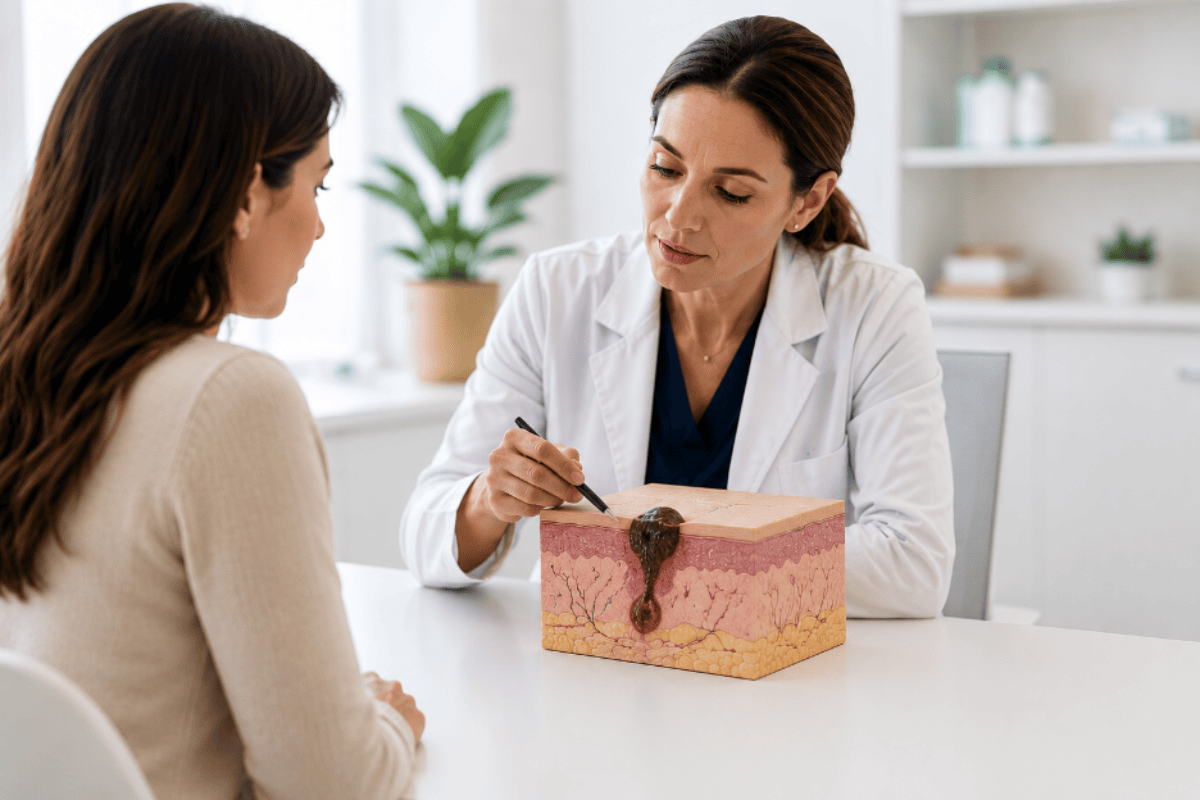
treatment. The reality is that melanoma treatment depends heavily on how early the cancer is detected and whether it has spread beyond the skin.
Today, there are more melanoma treatment options available than ever before. From surgical removal in early stages to advanced immunotherapy and targeted medications for more advanced disease, melanoma care has evolved significantly in recent years.
Understanding the general treatment pathway can help patients feel more informed and prepared for conversations with their care team.
Why Melanoma Stage Matters
Melanoma staging describes how deeply the cancer has grown and whether it has spread to nearby lymph nodes or other organs. Treatment recommendations are closely tied to these stages.
In general:
- Early-stage melanoma is often treated successfully with surgery alone
- Intermediate stages may require additional testing or preventive therapies
- Advanced melanoma may involve systemic treatments managed by oncology specialists
Because of this, melanoma skin cancer treatment can look very different from one patient to another.
Early-Stage Melanoma Treatment
For Stage 0 and many Stage 1 melanomas, surgical removal is typically the primary treatment. In these cases, the melanoma is usually confined to the skin and has not spread.
The procedure often involves:
- Removing the melanoma lesion
- Taking a margin of healthy surrounding skin to reduce recurrence risk
- Examining the tissue under pathology
Dermatologists frequently manage these early forms of melanoma treatment directly, particularly when the cancer is thin and localized.
When detected early, melanoma has a significantly better prognosis, which is why routine skin checks and prompt evaluation of suspicious moles remain so important.
Melanoma Treatment Stage 2: When Additional Evaluation Is Needed
Melanoma treatment stage 2 often becomes more complex because the cancer is typically thicker and carries a higher risk of spreading.
Treatment may still begin with surgery, but patients are more likely to undergo:
- Wider surgical excision
- Sentinel lymph node biopsy
- Imaging studies in some cases
- Closer long-term monitoring
Depending on pathology findings, some patients may also be referred to oncology to discuss additional melanoma cancer treatment options aimed at reducing recurrence risk.
This stage is often where collaboration between dermatology, surgical specialists, and oncology becomes especially important.
Advanced Melanoma Treatment Options
If melanoma spreads to lymph nodes or distant organs, treatment generally moves beyond surgery alone.
Advanced melanoma treatment options may include:
Immunotherapy
Immunotherapy helps the body’s immune system recognize and attack melanoma cells more effectively. This has become one of the most important advances in melanoma treatment over the past decade.
Some forms of immunotherapy are now considered a new melanoma treatment approach compared to traditional chemotherapy because they target the immune response rather than directly attacking rapidly dividing cells.
Targeted Therapy
Certain melanomas contain genetic mutations, such as BRAF mutations. In these cases, targeted medications may help slow or shrink cancer growth.
Targeted therapy represents another new treatment for melanoma that allows doctors to personalize care based on tumor characteristics.
Radiation Therapy
Radiation may sometimes be used when melanoma spreads to certain areas or when surgery is not ideal.
Clinical Trials
In some situations, patients may qualify for clinical trials evaluating a new treatment for malignant melanoma. These studies continue to improve how melanoma is managed and may offer access to emerging therapies.

When Dermatologists Refer Patients to Oncology
Many patients wonder whether their dermatologist will manage treatment entirely or if another specialist becomes involved.
In general:
- Dermatologists commonly diagnose melanoma and treat many early-stage cases
- Surgical specialists may assist with deeper or more extensive excisions
- Medical oncologists usually manage advanced melanoma treatment involving immunotherapy, targeted therapy, or systemic medications
This referral process does not automatically mean the cancer is severe. Often, it simply ensures patients receive the most appropriate expertise for their specific stage and treatment needs.
Follow-Up Care After Melanoma Treatment
Even after successful melanoma treatment, ongoing monitoring remains important because melanoma can sometimes recur or new melanomas may develop later.
Follow-up care may include:
- Routine skin examinations
- Lymph node evaluations
- Imaging when appropriate
- Monitoring for treatment side effects
- Continued sun protection and skin awareness
Patients who have had melanoma should also pay close attention to changes in moles, spots, or pigmented lesions and report concerns promptly.
Understanding Your Melanoma Care Pathway
Melanoma treatment continues to evolve, offering patients more options and better outcomes than in previous decades. While every case is different, early detection remains one of the most important factors influencing treatment complexity and prognosis.
Schedule an appointment at Bare Dermatology, our team evaluates suspicious lesions, performs skin cancer screenings, and helps guide patients through appropriate melanoma treatment and referral pathways when necessary. With multiple locations across Texas, we are committed to helping patients receive timely, professional skin cancer care.


