
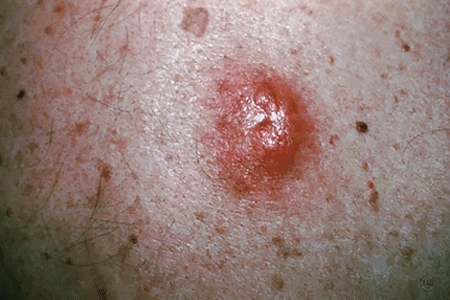
t moles are completely harmless. However, changes in a mole’s appearance can sometimes be an early sign of skin cancer. Learning how to tell if a mole is cancerous is essential for early detection, when treatment is most effective. Dermatologists rely on clear guidelines, like the ABCDE rule, to help patients recognize when a mole may need closer evaluation.
What Do Cancerous and Melanoma Moles Look Like?
A normal mole is often small, round or oval, and uniform in color. In contrast, cancerous moles may stand out because they look different from others on your skin.
To better understand what cancerous moles look like, dermatologists often focus on the following characteristics:
- Irregular or uneven borders
- Multiple colors (brown, black, red, or even white)
- Size larger than a pencil eraser
- Asymmetrical in shape
Melanoma, one of the most serious forms of skin cancer, can begin as a changing mole. These moles may appear:
- Darker or more irregular than typical moles
- Raised or flat with uneven texture
- Spreading in size over weeks or months
Some melanomas do not follow the typical patterns and may appear pink, red, or skin-colored. This is why visual changes alone are not always enough and why clinical evaluation matters.
It is important to understand that not all skin cancers present the same way. Some forms may appear subtle or develop differently from what you might expect. To better understand these differences, you can explore our guide on the differences between carcinoma and melanoma, which explains how each condition develops and why early detection is so important.

The ABCDE Rule: A Simple Way to Evaluate Moles
Dermatologists commonly use the ABCDE rule to identify signs of melanoma. This method helps break down what to look for:
- A – Asymmetry: One half of the mole does not match the other
- B – Border: Edges are irregular, blurred, or jagged
- C – Color: Uneven color or multiple shades within the same mole
- D – Diameter: Larger than 6mm (about the size of a pencil eraser)
- E – Evolving: Any change in size, shape, color, or symptoms like itching or bleeding
The “E” for evolving is especially important. Even a mole that looks normal at first can become concerning if it changes.
For a more detailed breakdown of each step, you can explore our article on the ABCDE rule for skin cancer and how to spot melanoma early, which explains how dermatologists use this method in clinical evaluations.
Signs of Cancerous Moles You Should Not Ignore
Beyond the ABCDE rule, there are additional concerning mole behaviors that may indicate something more serious:
- A new mole appearing in adulthood
- A mole that itches, bleeds, or becomes tender
- A sore that does not heal
- A mole that looks very different from others (sometimes called the “ugly duckling”)
These red flags of moles should prompt a professional evaluation.
For a broader understanding of warning signs beyond moles, you can review common symptoms of skin cancer and early signs you should never ignore, which provides helpful guidance on when to seek care.
When Should You See a Dermatologist?
It is important to know when a mole moves from “normal” to something that needs attention. You should schedule an evaluation if you notice:
- Any ABCDE changes
- A mole that looks different from the rest
- Rapid growth or color changes
- Persistent symptoms like itching, crusting, or bleeding
Even if you are unsure, it is always better to have a dermatologist take a closer look. Many benign moles can have suspicious features, and only a trained professional can provide an accurate diagnosis.
Why Early Detection Matters
Being able to tell if a mole is cancerous can make a life-saving difference, since most skin cancers, including melanoma, are highly treatable when caught early.Delays in diagnosis, however, can allow cancer to spread and become more difficult to manage.
Regular skin checks, both at home and with a dermatologist, are one of the most effective ways to catch potential issues early. Monitoring your skin over time helps you recognize what is normal for you and what is not.
Stay Proactive About Your Skin Health
Understanding the signs of cancerous moles empowers you to take control of your skin health. Small changes can carry important meaning, and early action can lead to better outcomes.
If you have noticed any symptoms or simply want a professional skin evaluation, our team at Bare Dermatology offers comprehensive skin checks across multiple locations in Texas. Schedule an appointment with our board-certified dermatologists.


