
How Fast Does Melanoma Skin Cancer Spread? What Patients Need to Know Early
Melanoma is one of the most serious forms of skin cancer, not because it is the most common, but because of how unpredictable and aggressive it can be if left untreated.
For many patients, this raises an urgent concern: how fast does melanoma skin cancer spread? The answer depends on several important factors, including the type of melanoma, how deep it has grown, and how early it is detected.
Understanding what “fast” really means in medical terms can help patients recognize warning signs sooner and seek care before the disease advances.
When people hear that melanoma spreads quickly, they often imagine weeks or months. In reality, melanoma growth rates vary widely depending on many factors. Some melanomas grow slowly over years, while others progress much faster, invading deeper layers of skin and spreading to other parts of the body in a matter of months.
How Long Does Skin Cancer Take to Develop?
Early-stage melanoma begins in the top layer of the skin (the epidermis). At this stage, it may appear as a subtle change in a mole or pigmented spot. Once melanoma penetrates deeper into the dermis, the risk of spread increases significantly because cancer cells gain access to lymphatic channels and blood vessels. The size of the lesion that is observed on the surface of the skin does not always relate to the depth.
This is why early detection is so critical; melanoma found before deep invasion is highly treatable. If you’re unsure whether a mole looks concerning, Bare Dermatology’s guide to the ABCDE rule for skin cancer can help you recognize early signs of melanoma. However, these are rough, generic guidelines and melanoma does not always follow the rules, which underscores the importance of having a board-certified dermatologist assist with evaluating any suspicious lesions.
There is no reliable way to predict growth speed based on appearance alone, which is why professional skin exams and dermoscopic evaluation play such an important role.
How Fast Does Skin Cancer Progress Once It Turns Invasive?
Once melanoma becomes invasive, it can spread to nearby lymph nodes and distant organs. Advanced melanoma may spread to the lungs, liver, brain, or bones, particularly in later stages.
When melanoma spreads to the brain, growth can be aggressive and symptoms may progress quickly, underscoring the importance of early diagnosis before metastasis occurs.
Early Signs That Matter Most
The earliest warning signs are often subtle. Many cases are first noticed because a patient observes a change rather than pain or discomfort. These changes may include:
- A mole that grows or changes shape
- Uneven or irregular borders
- Color changes or multiple colors within one lesion
- New pigmentation
- A spot that looks different from others on the body
Recognizing these changes early can make a life-saving difference. To learn more, Bare Dermatology provides a helpful guide on the early symptoms of skin cancer that should never be ignored.

Symptoms of Melanoma That Has Spread
As melanoma advances, symptoms may extend beyond the skin. Symptoms of melanoma that has spread can include persistent fatigue, unexplained weight loss, swollen lymph nodes, bone pain, headaches, or neurological changes. These symptoms typically appear much later in the disease course, which is why relying on symptoms alone is not enough, and routine skin exams remain essential.
When to Seek Care
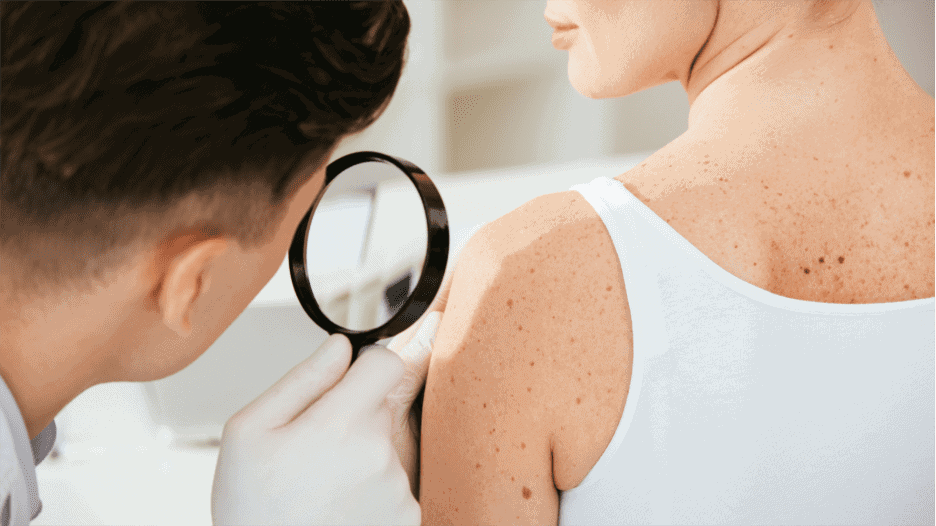
Questions about how fast melanoma spreads are common and they’re not something patients should have to answer on their own. A professional skin evaluation can provide clarity and peace of mind before changes become more serious. Any changing, new, or unusual skin lesion deserves attention, especially if it evolves over a short period of time. Additionally, during skin exams, dermatologists often find that the lesions that patients were concerned about are not worrisome, and that others that were not suspected at all are the lesions of concern. This emphasizes the importance of having a trained eye looking over all of the skin. Melanoma can appear in places many patients would never expect.
Melanoma does not always look alarming at first glance. Subtle changes are often the earliest red flags, and timing truly matters. When it comes to melanoma, acting early can be the difference between a simple treatment and a life-altering diagnosis. Learn more about melanoma, including evaluation and treatment options, at Bare Dermatology.
Why Early Detection Changes Everything
When melanoma is diagnosed early, before deep invasion or spread, treatment outcomes are excellent. Survival rates drop significantly once melanoma advances, which reinforces why patients should never “wait and see” when a mole changes.
Expert dermatologic evaluation allows melanoma to be identified at its earliest and most treatable stages. If you notice a new or changing lesion, absolutely schedule a professional skin evaluation with Bare Dermatology. But an annual thorough skin check is recommended for all individuals with skin; that means everyone. Because there may be undetected lesions of concern that may appear normal to the untrained eye, or in areas that are difficult to self-evaluate. With multiple locations across Texas, Bare Dermatology makes it easy to access timely, professional care focused on early detection and long-term skin health.


